by Dean Cheong
Share
by Dean Cheong
Share

A common and costly misconception lulls many business owners into a false sense of security. They believe a company with no activity has no obligations. This assumption is the core of the dormant company trap.
In reality, Singapore’s regulatory framework requires specific procedures regardless of operational status. The Inland Revenue Authority of Singapore (IRAS) mandates compliance even for inactive entities. Falling into this trap can lead to severe penalties and damage your corporate standing.
Understanding your duties is crucial. For instance, you must submit an Income Tax Return if your total income exceeded $22,000 in the preceding year. This also applies to those with self-employment net profit above $6,000, or non-residents with local income.
This guide serves as your authoritative resource. We will clarify what “dormant” means, outline the step-by-step filing process, and help you avoid common mistakes. Proactive management is a fundamental aspect of responsible business ownership here.
Key Takeaways
- Inactive companies are not automatically exempt from regulatory requirements.
- Maintaining good corporate standing requires ongoing compliance with IRAS.
- Specific income thresholds trigger the obligation to submit an Income Tax Return.
- Receiving a notification from IRAS means you must file, regardless of income level.
- Ignoring these obligations can result in financial penalties and administrative complications.
- A dormant status does not equate to a zero-maintenance status for your company.
- Proactive tax management protects your business from unforeseen risks.
Understanding Dormant Companies in Singapore
The concept of dormancy in Singapore is often misunderstood, leading to critical compliance gaps. Clarifying this status is the first step to avoiding the regulatory trap.
Defining a Dormant Company
A dormant company is formally defined as one with no significant accounting transactions during its financial period. It remains legally registered. This accounting status does not erase all regulatory responsibilities.
There is a key legal distinction. Dormancy is not simply inactivity. It is a specific status that does not eliminate potential tax filing requirements. Entities must still prepare for official assessment.
Common Misconceptions
The most prevalent error is assuming automatic exemption from filing a return. In reality, dormant entities may need to submit nil returns or specific documentation.
Taxpayers often believe exemption applies if there is no income, no payroll, or no active operations. This is incorrect. Certain types of income, like foreign-sourced or passive income, can still trigger reporting duties.
Even during dormant years, maintaining accurate records and communicating with authorities is essential. Companies must keep IRAS informed of their status to avoid penalties from incorrect assumptions.
Why Dormant Companies Must Comply with Tax Regulations
Compliance is not a function of activity level but a fundamental condition of maintaining a registered legal entity. Corporate registration creates ongoing obligations that persist regardless of business activity levels.

Regulatory Requirements and Compliance
The Inland Revenue Authority of Singapore (IRAS) maintains comprehensive oversight. You must file an Income Tax Return if you receive a letter, form, or SMS from them. This requirement stands regardless of earnings.
Even entities with no income may need to submit nil returns. Ignorance of these requirements is an unacceptable defense. Proper documentation of dormant status represents the prudent approach to managing these annual compliance requirements.
Risks and Penalties of Non-Compliance
Late filing or non-filing of Individual Income Tax Returns can result in penalties. These financial penalties accumulate based on the amount of tax owed and duration of non-compliance.
Directors and shareholders may face personal liability or restrictions on future business activities. Non-compliance risks striking off from the business register and damages professional reputations.
Maintaining compliance protects the company’s legal standing. It preserves the ability to resume operations smoothly and maintain credibility with authorities.
How to File Taxes in Singapore for Dormant Companies
The filing process for a dormant company is a structured digital procedure that demands attention to detail. It typically commences upon receiving a notification from the authority. Even with no activity, submitting an accurate income tax return is a core compliance duty.
Step-by-Step Instructions
Follow this sequence to ensure proper submission for an inactive entity.
- Determine the need to file. You must file if IRAS sends you a form or if specific income thresholds were met in the past year.
- Gather relevant details. Have your company’s financial period and confirmation of dormant status ready. Note any minimal transactions.
- Access the myTax Portal. Log in securely using your Singpass or Singpass Foreign user Account (SFA).
- Navigate to the correct form. Click on “Individuals” and then select “File Income Tax Return” to begin the electronic form.
- Complete the declaration. For a dormant entity, report nil or minimal income. If there was no employment income or employer relationship, indicate this clearly.
Using Digital Services Like myTax Portal
This digital gateway is the primary method for filing. The electronic form is streamlined for straightforward cases, often taking just 5-10 minutes.
After successful e-filing, an acknowledgement page appears. Save or print this as proof of compliance. Note the critical deadlines: submit electronically by 18 April, or by 15 April for paper submissions.
If the standard process does not fit your company’s circumstances, contact IRAS directly for guidance. Proactive engagement prevents penalties.
Preparing the Necessary Documents for Tax Filing
Gathering specific forms and details prior to filing transforms a regulatory duty into a straightforward administrative task. Having the correct paperwork organized is crucial for a smooth process.

Essential Records and Forms
Your Singpass or Singpass Foreign user Account (SFA) is the essential authentication tool for the myTax Portal. Ensure it is active before you begin.
You may need Form IR8A. This form contains your employment income information if your employer does not participate in the Auto-Inclusion Scheme. For a dormant entity, this is typically not required unless directors received salaries.
Compile details of any minimal revenue. This includes rental income from property or interest from bank accounts. Accurate income details support a legitimate declaration.
Maintaining Proper Documentation
You must keep proper records for at least five years. This retention period allows for potential audits by authorities. A solid grasp of understanding record-keeping is fundamental for this.
Systematic organization of bank statements and status correspondence demonstrates professional compliance management. Well-maintained information protects your company during reviews.
Leveraging Online Services for Efficient Tax Filing
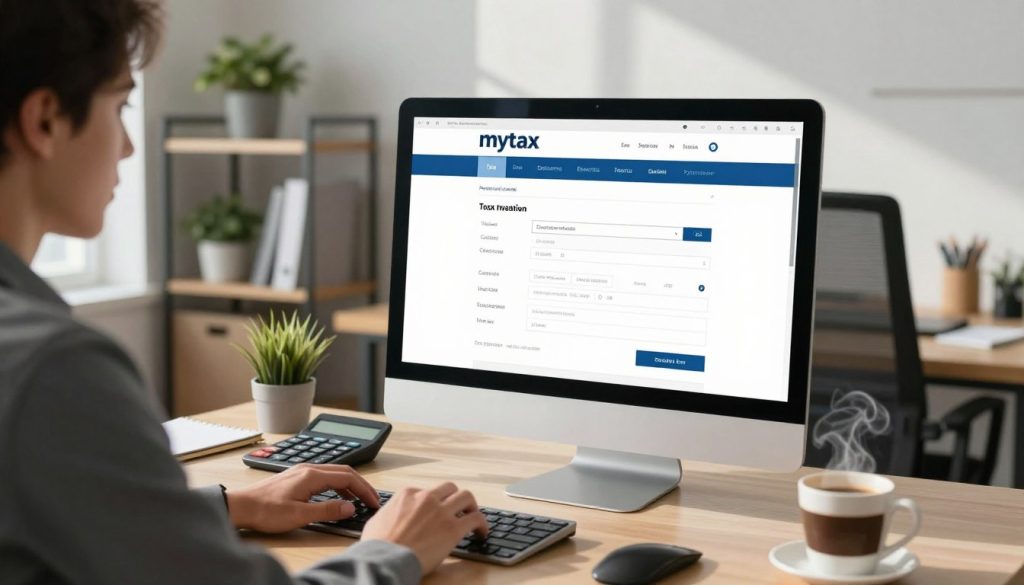
The myTax Portal represents a cornerstone of efficient public administration, directly benefiting companies managing their obligations. This digital service transforms a mandatory duty into a streamlined process.
Advantages of e-Filing
The portal offers 24/7 access from any location. You can submit your declaration according to your own schedule.
If you cannot finish in one sitting, save your work as a draft. The system retains it for 14 days. A 20-minute timeout protects your data security.
For those with an employer in the Auto-Inclusion Scheme, the process is even smoother. Your employment income information is pre-filled, reducing manual entry and errors.
Navigating the myTax Portal
Intuitive prompts and validation checks guide you through each step. This design minimizes mistakes before you finalize your submission.
Upon successful e-filing, an immediate acknowledgement page appears. Save this as proof of your timely compliance.
Leveraging this service ensures faster processing and clearer communication with IRAS.
- Unmatched Convenience: Access the platform anytime to manage your declarations.
- Enhanced Accuracy: Automated data pre-filling and validation safeguards your income details.
- Secure and Reliable: Features like session timeouts protect your sensitive information.
Avoiding Common Filing Mistakes and Overlooked Deductions
Accurate tax filing hinges on meticulous attention to detail, especially when navigating the complex landscape of available reliefs. Even simple oversights can trigger compliance reviews.
Identifying Frequent Errors
Data from authorities reveals a pattern. The most commonly incorrect tax reliefs are for qualifying children, spouses, and parents. Most errors occur because taxpayers fail to meet the strict eligibility conditions.
Duplicate claims for the same dependant are another pitfall. While reliefs can be shared among eligible parties, the total amount claimed by all cannot exceed the statutory maximum.
Tips for Accurate Income and Relief Claims
Declare all sources of income, however minimal. Scrutinize eligibility for every deductions and relief before submission. If you discover a mistake, voluntarily inform the authority promptly to correct your tax returns.
- Verify all pre-filled income details against your own records.
- Maintain receipts for any expenses you plan to claim.
- Understand which deductions remain relevant for a dormant entity during the year assessment.
- Review the specific criteria for each tax reliefs to avoid ineligible claims.
Staying Compliant with Extensions, Amendments, and Notifications
The regulatory framework provides structured avenues for managing deadlines, but strict adherence to timeframes is non-negotiable. Proactive handling of these formalities is a hallmark of sound corporate governance.
Requesting Filing Extensions and Amendments
If you require more time, an extension of up to 14 days may be requested via the ‘Apply for Extension of Time to File’ service on the myTax Portal. This is a critical tool for ensuring an accurate submission.
Should an error be spotted right after submitting, a single re-filing is permitted. This correction must be completed by 18 April. After receiving your official Notice of Assessment, any further amendments must be filed within 30 days from the date on that bill using the ‘Amend Tax Bill’ service.
Keeping Up with IRAS Communications
Most official notices from IRAS are now digitized. They are delivered directly through your myTax Portal account. Staying informed requires active management of your contact details.
Use the ‘Update Contact & Notification Preferences’ digital service to ensure you receive all critical information. Missing a notice can lead to unawareness of new requirements or missed response deadlines.
We recommend a proactive approach:
- Log into the myTax Portal regularly during the compliance period.
- Verify the accuracy of your Notice of Assessment promptly each year assessment.
- Act within days of receiving any official communication.
This disciplined process protects your corporate standing over the years.
Conclusion
Ultimately, maintaining a registered corporate entity carries inherent responsibilities that extend beyond operational activity. Tax compliance is a continuous duty, not contingent on income levels during the year.
Taxpayers managing dormant entities must understand key requirements. These include submitting income tax returns when notified, maintaining records, and meeting deadlines. Digital services like the myTax Portal have transformed this process.
They offer individuals convenient, secure access for filing income declarations. Accurate tax returns and proper relief claims are essential. They prevent penalties and maintain good standing.
Proactive compliance represents the most effective approach. View these obligations as fundamental to responsible corporate management. Protect your business interests by reviewing your current compliance status. Leverage the digital tools available to simplify ongoing tax duties.
FAQ
What exactly defines a dormant company for tax purposes in Singapore?
What are the penalties for not filing a tax return for a dormant entity?
How does a dormant company file its annual income tax return?
What essential documents are needed to prepare a dormant company’s tax filing?
What is the key advantage of using the myTax Portal for this process?
What is a common filing mistake for dormant companies?
Can a dormant company get an extension for its tax filing deadline?
How should a company handle receiving an IRAS Notice of Assessment when dormant?
Simplify your business compliance today.
Navigating Singapore’s regulatory landscape doesn’t have to be a solo journey. From seamless incorporation to complex tax advisory, Hub is the partner you can count on. Call us today at +65 8121 2113
STAY IN THE LOOP
Subscribe to our free newsletter.

Declare your UBO to ACRA in Singapore with confidence. Our step-by-step instructions make the process easy.

Establish a Singapore family office with our comprehensive guide. Leverage 13O & 13U regulations for optimal setup and compliance.
Master the GST filing process in Singapore. Our guide covers IRAS requirements, F5 return details, filing deadlines, and penalties for registered businesses.
Learn the essentials of registering a business in Singapore as a foreigner, even without relocating. Our guide offers a streamlined process.