by Dean Cheong
Share
by Dean Cheong
Share
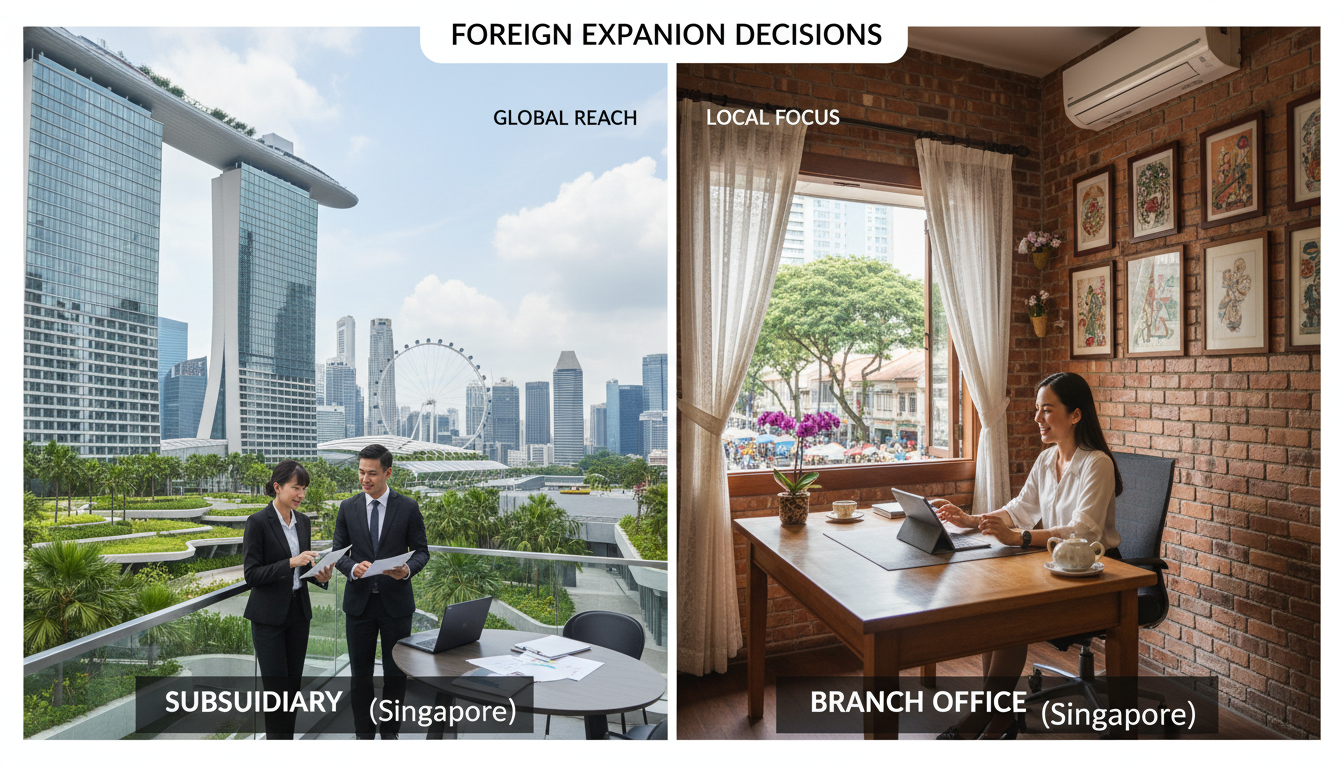
Could the legal framework you choose today determine the ultimate success of your regional growth strategy? As firms look to capture opportunities within a market of 680 million people and a GDP exceeding US$3.6 trillion, selecting the right entry vehicle is vital.
Navigating foreign expansion options requires a deep understanding of how different entities impact your long-term goals. Whether you prioritize liability protection or operational flexibility, the path you take shapes your future in the region.
We provide a clear analysis of the primary models for foreign company expansion Singapore businesses often consider. By evaluating these structures, leadership teams can align their corporate setup with specific operational needs. This guide helps you move forward with confidence, ensuring your firm is positioned to thrive in this dynamic economic gateway.
Understanding the Singapore Subsidiary vs Branch Office Landscape

Starting a business in Singapore means picking the right structure. This choice is key for your local success and future plans. It helps you follow the rules and grow in a tough market.
The structure you pick affects legal liability and taxes in Singapore. A subsidiary is its own legal body, while a branch is part of the parent company. Knowing this helps manage risks and work better.
Think about your goals when choosing a structure. We suggest looking at a few important things:
- How much legal protection you need.
- The tax rules and benefits in Singapore.
- How much freedom you want to run your business.
- The effort needed for reports and rules.
- How your brand looks to locals and clients.
Your choice in Singapore affects your risk and tax benefits. We aim to guide you through the rules. This way, you can pick wisely and secure your business’s future.
Defining the Singapore Subsidiary Structure
Setting up a subsidiary in Singapore is a smart move for companies wanting to grow locally. It’s a Private Limited Company under the Singapore Companies Act. This makes it a legal person separate from its parent company.
Key Characteristics of a Private Limited Company
A Private Limited Company can act on its own in the local market. It can own property, make contracts, and go to court. These are key differences from other business setups.
It’s owned by shareholders, who can be foreign companies or people. This makes it clear who owns what. It’s important for keeping financial records right and following local rules.
Benefits of Operating as a Separate Legal Entity
Being a separate legal entity helps manage risks. The parent company is usually safe from the subsidiary’s debts. This is good for protecting the brand and assets.
This setup also lets local teams make decisions for the Singapore market. It helps build strong ties with local partners and clients. Being independent is a big plus for this structure.
Defining the Singapore Branch Office Structure
Knowing what a branch office is key for companies looking to do business in Singapore. It’s not like other business setups. It’s more like an extension of your main company.
It’s important to see how branch offices work with local laws. Since they’re not their own legal body, the main company is in charge. This means the main company handles all the branch’s actions in Singapore.
Nature of a Branch Office as an Extension of the Parent
A branch office in Singapore is tied to its main office. So, any deals, debts, or legal issues the branch has, the main company must deal with.
“The choice of corporate structure is not merely a legal formality; it is the foundation upon which your operational risk and strategic flexibility are built.”
The branch doesn’t have its own board or shareholders like a regular company. It’s run by people who work for the main company. This way, the main company keeps full control over the branch’s work and plans.
Operational Scope and Limitations
The branch office can only do what the main company allows. It can do business, but it must follow the main company’s goals.
Branch offices can’t protect the main company from local problems. This means the main company’s assets and risks are linked to the branch’s actions in Singapore.
Branch offices also have to report to the Accounting and Corporate Regulatory Authority (ACRA). They must share the main company’s financial reports. This makes things clear for local partners and authorities. Knowing these details helps you decide if this setup fits your future plans.
Legal Liability and Risk Exposure
Deciding between a subsidiary and a branch office means looking at legal liability. It’s key to know how each setup handles legal issues when you enter a new market. We focus on managing risks to keep your parent company’s assets safe from local problems.
Limited Liability Protection for Subsidiaries
A subsidiary is its own legal body, separate from the parent company. If a subsidiary owes money or gets in trouble with the law, it’s usually only its own money at risk. This setup protects the parent company from the subsidiary’s financial issues.
“Risk is not just about what you might lose, but about how you structure your foundation to ensure that a single failure does not compromise the entire enterprise.”
This separation helps firms limit their risks to their Singapore operations. It’s great for companies in high-risk areas where legal troubles or unexpected changes in rules are common. This setup gives peace of mind to everyone involved.
Unlimited Liability Risks for Branch Offices
A branch office, on the other hand, is just an extension of the parent company. Since there’s no legal separation, the parent company is fully responsible for the branch’s actions and debts. This is a big risk for branch offices in Singapore.
If the branch gets sued or loses a lot of money, the parent company’s worldwide assets could be in danger. Without a protective layer, any problems in the branch can hurt the parent company’s finances. This is why many international companies choose the subsidiary model instead.
Tax Implications for Foreign Companies in Singapore
Choosing between a subsidiary and a branch office changes your tax situation in Singapore. You need a smart plan to follow tax rules and improve your finances.
Corporate Tax Residency and Incentives for Subsidiaries
A subsidiary in Singapore is seen as its own legal body. It’s usually taxed at 17 percent, the main corporate tax rate.
Also, subsidiaries can get special help from the government. For example, the Start-Up Tax Exemption (SUTEC) helps new businesses. This makes subsidiaries great for growing your business.
Tax Treatment of Branch Office Profits
A branch office is seen as part of its parent company. This means profits are taxed differently than a subsidiary’s.
Branch profits are taxed at the standard rate. But, you need to plan taxes across borders carefully. You must split income and expenses correctly to follow local rules.
Double Taxation Agreements and Compliance
Singapore has many Double Taxation Agreements (DTAs) to avoid double taxation. These agreements help foreign companies manage their taxes better.
Using these agreements wisely can lower your taxes. Keep detailed records to follow both local and international tax rules. This is key to your business’s success.
Registration Process and Regulatory Requirements
Understanding the rules in Singapore is key. You need to know how to register a subsidiary or branch office. The Accounting and Corporate Regulatory Authority (ACRA) sets the rules.
Steps to Set Up a Subsidiary in Singapore
Starting a local company has important steps. First, you need to get your company name approved. Then, you file documents online through BizFile+.
- Reserve a unique company name with ACRA.
- Appoint at least one director who is ordinarily resident in Singapore.
- Prepare and file the company constitution.
- Appoint a qualified company secretary within six months of incorporation.
These steps help you start strong. They give your company the freedom to grow.
Procedures to Register a Branch Office in Singapore
Registering a branch office is different. It’s like an extension of your main company. You need to prove your main company exists and has the right to open a branch.
- Submit the certificate of incorporation of the foreign parent company.
- Provide a certified copy of the parent company’s charter or bylaws.
- Appoint at least one authorized representative who is a local resident.
- Maintain a registered office address within Singapore for official correspondence.
Documentation and Capital Requirements
Both types need careful paperwork. You’ll need to show proof of your company’s existence. This might mean getting documents notarized or apostilled.
Also, think about how much money you need. You don’t have to put in a lot for most private companies. But, make sure you have enough for costs and fees. Getting your documents ready helps you start in Singapore smoothly.
Operational Autonomy and Corporate Governance
To set up in Singapore, you need to know how your structure affects management and oversight. Your local entity’s setup affects control and regulatory needs. Picking the right structure keeps your business in line with local laws and your global plan.
Management Control in a Subsidiary
A subsidiary is its own legal entity, giving it a lot of freedom. It needs a local board of directors for day-to-day decisions. This setup lets the subsidiary make its own policies and decisions.
This freedom lets the local team act fast to market changes in Singapore. The parent company still has control through shares. But the subsidiary can build trust locally. It’s key to understand the legal implications of this setup, as it sets clear boundaries.
Reporting Obligations for Branch Offices
Registering a branch office in Singapore makes it an extension of your parent company. Unlike a subsidiary, a branch doesn’t have its own legal identity. This affects its reporting needs. A branch’s oversight is more centralized, tied to the parent company.
The reporting duties for these two setups are different:
- Financial Statements: A subsidiary must file its own audited financials with ACRA.
- Parental Filings: A branch might need to file the parent company’s financials instead of its own.
- Compliance Scope: Branches must stick to the parent company’s defined activities.
- Transparency: Both must follow local filing deadlines to stay in good standing.
Knowing these differences is crucial for transparency and meeting legal duties. Aligning your governance with your business goals helps you expand smoothly in Singapore.
Capitalization and Funding Considerations
Understanding the financial scene in Singapore is key. You need to think about how to fund and make money from your local work. Setting up a strong financial plan early helps your business stay flexible and follow rules.
We aim to make these complex money matters easier for your company.
Equity Financing and Shareholder Structures
Choosing a subsidiary means creating a new legal body that can sell shares to its parent. This setup makes it easy to manage money and share ownership. It helps track investments and handle shareholder rights in Singapore.
Think about these points when planning your money structure:
- The first money you need to start your business.
- How to get more money from local investors or loans.
- The effect of selling shares on your company’s global rules.
- How shareholder deals match your parent company’s rules.
Inter-company Funding and Repatriation of Profits
Getting money from your main office to your Singapore branch has tax rules. Subsidiaries send money back as dividends, which don’t get taxed in Singapore. This is good for companies wanting to manage their money better.
Branches, on the other hand, send money back directly. Knowing the tax rules for subsidiaries and branches is crucial for making more money. Branches might be simpler in some ways, but their tax on money sent back can be different from subsidiaries.
By looking at the tax rules for subsidiaries and branches, you can plan your finances well. Check your loan and profit sharing plans to make sure they follow local laws. This way, you can keep your finances in order while growing your business.
Public Perception and Brand Credibility
Your business structure in Singapore shows your values and plans. Legal and tax rules are important, but your brand’s image matters more. People look at your structure to see if you care about the local economy.
Building Local Trust as a Singaporean Entity
A subsidiary shows you’re serious about the Singapore market. It lets you have your own identity, building trust with locals. Having your own legal presence means you’re ready to grow with the community.
“Trust is the currency of business, and in a global market, your legal structure is the first statement you make about your reliability and long-term vision.”
Perception of Branch Offices by Local Partners
Branch offices have their own set of challenges. Local partners might be unsure about the parent company’s role in disputes. Knowing the legal side of branch offices in Singapore is key to managing these doubts.
Branch offices are simple, but they might seem unstable. Local partners might like the clear separation of assets in subsidiaries. By tackling these issues early, you can create a strong brand that helps you build better business relationships.
Strategic Decision Making for Foreign Expansion
When you plan to enter the Singapore market, you must decide between a subsidiary and a branch office. This choice shapes your future operations. We help you make this decision, ensuring your growth is strong and flexible.
Assessing Long-term Business Goals
Most big companies choose a subsidiary because it keeps risks away from the main company. It also lets the new entity act as a regional center. This setup is great for growing over time.
Think about how much freedom you need in the local market. A subsidiary lets you make local deals and have your own brand. This is key for lasting success. We suggest looking at these points to match your goals:
- How big you want to grow in the region.
- How much risk you can handle.
- If you want to make decisions on your own.
Evaluating Market Entry Speed vs. Stability
Every business must weigh the pros and cons of different foreign expansion options. A branch office is quicker to set up but lacks the benefits of a subsidiary. Your choice depends on whether you need to be in the market fast or focus on stability.
Speed is important for companies that want to try a new market quickly. But, don’t forget the benefits of a subsidiary for the long run. We help you pick the right structure for your business goals and risk management.
Conclusion
Choosing the right corporate structure is key to your success in the region. It’s important to understand your risk level and goals. This helps you decide between a branch and a subsidiary.
A branch office is easy to start but links your global assets to local risks. Many companies prefer a subsidiary for its benefits. These include limited liability and tax savings. This makes setting up a subsidiary in Singapore a wise choice for growth.
Think about your expansion plans and the structure you need. Whether you want speed or protection, choose wisely. Our team is here to help you make the right choice for your business in Singapore.
FAQ
Key Characteristics of a Private Limited Company
Benefits of Operating as a Separate Legal Entity
Nature of a Branch Office as an Extension of the Parent
Operational Scope and Limitations
Limited Liability Protection for Subsidiaries
Unlimited Liability Risks for Branch Offices
Corporate Tax Residency and Incentives for Subsidiaries
Tax Treatment of Branch Office Profits
Double Taxation Agreements and Compliance
Steps to Set Up a Subsidiary in Singapore
Procedures to Register a Branch Office in Singapore
Documentation and Capital Requirements
FAQ
Key Characteristics of a Private Limited Company
A subsidiary is usually a Private Limited Company, separate from its parent. This structure lets it own assets, make contracts, and handle liabilities on its own. For big firms like Google or Unilever, it creates a clear line between local and global assets.
Benefits of Operating as a Separate Legal Entity
The main plus of a subsidiary is it protects the parent company. Since it’s a separate legal entity, the parent’s liability is only to the share capital. This separation is crucial for companies wanting a professional, autonomous presence while managing local risks.
Nature of a Branch Office as an Extension of the Parent
A branch office is seen as a direct part of the foreign parent company. It doesn’t have its own legal identity. So, the parent company is fully responsible for all debts and contracts in Singapore.
Operational Scope and Limitations
A branch office’s activities are limited to what the parent company allows. This makes for a more integrated global operation. But, any legal action against the branch in Singapore is seen as against the parent company, no matter where it’s based.
Limited Liability Protection for Subsidiaries
Setting up a subsidiary in Singapore is attractive because of its liability protection. In case of legal issues or insolvency, the parent’s assets are safe. This makes subsidiaries a good choice for high-risk sectors or firms with big global intellectual property.
Unlimited Liability Risks for Branch Offices
Branch offices, on the other hand, mean the parent company has unlimited liability. We advise clients that this model needs a lot of trust in local management and risk controls. A single local claim could affect the parent’s global balance sheet.
Corporate Tax Residency and Incentives for Subsidiaries
Subsidiaries are seen as Singapore tax residents. This lets them get local tax breaks like the Start-Up Tax Exemption (SUTEC) and double taxation agreements. They also get to benefit from Singapore’s wide network of over 80 DTAs, lowering their effective tax rate.
Tax Treatment of Branch Office Profits
Branch offices are usually non-residents for tax purposes. They’re taxed at the same corporate rate as locals but might not get the same tax incentives. The key difference is in repatriating profits without extra withholding taxes, which vary by jurisdiction.
Double Taxation Agreements and Compliance
Understanding tax implications requires knowing how the parent company’s home country treats foreign branch income. We work with firms to avoid double taxation while keeping full compliance with the IRAS.
Steps to Set Up a Subsidiary in Singapore
To register a subsidiary, a foreign company must have at least one local director and a qualified secretary. The process involves reserving a name and filing incorporation documents with ACRA. We guide clients through this to ensure they meet the Companies Act.
Procedures to Register a Branch Office in Singapore
To register a branch office, the parent company must appoint two local agents. Unlike a subsidiary, the branch must also file the parent’s audited financial statements with ACRA annually. This might raise privacy concerns for some private foreign entities.
Documentation and Capital Requirements
Both structures need a registered office in Singapore. A subsidiary requires a minimum paid-up capital (often just S
FAQ
Key Characteristics of a Private Limited Company
A subsidiary is usually a Private Limited Company, separate from its parent. This structure lets it own assets, make contracts, and handle liabilities on its own. For big firms like Google or Unilever, it creates a clear line between local and global assets.
Benefits of Operating as a Separate Legal Entity
The main plus of a subsidiary is it protects the parent company. Since it’s a separate legal entity, the parent’s liability is only to the share capital. This separation is crucial for companies wanting a professional, autonomous presence while managing local risks.
Nature of a Branch Office as an Extension of the Parent
A branch office is seen as a direct part of the foreign parent company. It doesn’t have its own legal identity. So, the parent company is fully responsible for all debts and contracts in Singapore.
Operational Scope and Limitations
A branch office’s activities are limited to what the parent company allows. This makes for a more integrated global operation. But, any legal action against the branch in Singapore is seen as against the parent company, no matter where it’s based.
Limited Liability Protection for Subsidiaries
Setting up a subsidiary in Singapore is attractive because of its liability protection. In case of legal issues or insolvency, the parent’s assets are safe. This makes subsidiaries a good choice for high-risk sectors or firms with big global intellectual property.
Unlimited Liability Risks for Branch Offices
Branch offices, on the other hand, mean the parent company has unlimited liability. We advise clients that this model needs a lot of trust in local management and risk controls. A single local claim could affect the parent’s global balance sheet.
Corporate Tax Residency and Incentives for Subsidiaries
Subsidiaries are seen as Singapore tax residents. This lets them get local tax breaks like the Start-Up Tax Exemption (SUTEC) and double taxation agreements. They also get to benefit from Singapore’s wide network of over 80 DTAs, lowering their effective tax rate.
Tax Treatment of Branch Office Profits
Branch offices are usually non-residents for tax purposes. They’re taxed at the same corporate rate as locals but might not get the same tax incentives. The key difference is in repatriating profits without extra withholding taxes, which vary by jurisdiction.
Double Taxation Agreements and Compliance
Understanding tax implications requires knowing how the parent company’s home country treats foreign branch income. We work with firms to avoid double taxation while keeping full compliance with the IRAS.
Steps to Set Up a Subsidiary in Singapore
To register a subsidiary, a foreign company must have at least one local director and a qualified secretary. The process involves reserving a name and filing incorporation documents with ACRA. We guide clients through this to ensure they meet the Companies Act.
Procedures to Register a Branch Office in Singapore
To register a branch office, the parent company must appoint two local agents. Unlike a subsidiary, the branch must also file the parent’s audited financial statements with ACRA annually. This might raise privacy concerns for some private foreign entities.
Documentation and Capital Requirements
Both structures need a registered office in Singapore. A subsidiary requires a minimum paid-up capital (often just S$1). A branch office doesn’t need formal share capital, relying on the parent’s capital.
Management Control in a Subsidiary
A subsidiary offers strong management control through its own board. This lets it tailor governance to the local market while aligning with the global vision.
Reporting Obligations for Branch Offices
Branch offices have stricter public disclosure rules. They must file their own audited accounts and the parent’s global financial statements. This makes the parent’s global financial health public in Singapore, a key factor for firms wanting to keep their data private.
Equity Financing and Shareholder Structures
Subsidiaries can raise capital by issuing new shares to third parties or employees. This is useful for tech firms wanting to incentivize local talent with equity.
Inter-company Funding and Repatriation of Profits
Branch offices fund operations through inter-company transfers. While repatriating profits is generally easy in Singapore, the choice between structures affects global cash management. This includes cross-border interest payments and management fees.
Building Local Trust as a Singaporean Entity
A subsidiary, appearing as a “Pte Ltd” company, signals a long-term commitment to Singapore. This can be a big plus when dealing with local vendors, government tenders, or building trust with consumers.
Perception of Branch Offices by Local Partners
Branch offices carry the prestige of the global brand. But, some local stakeholders might see them as less committed. For established MNCs like BMW or Siemens, the branch structure reinforces the parent’s backing.
Assessing Long-term Business Goals
We help clients weigh their immediate market entry needs against their five-year growth plan. If the goal is to expand regionally with Singapore as a hub, a subsidiary is usually better. It offers scalability and tax benefits.
Evaluating Market Entry Speed vs. Stability
While a branch office might seem more integrated, the benefits of a subsidiary are clear. It provides better legal protection and tax efficiency for foreign expansion in Singapore. Our role is to ensure your strategy is compliant and future-proof.
What are the primary differences between a Singapore subsidiary and a branch office?
The main differences are in legal status and liability. A subsidiary is a separate legal entity, limiting the parent’s liability. A branch office is an extension of the parent, meaning the parent has unlimited liability for the branch’s debts and actions in Singapore.
What are the tax implications of choosing a subsidiary over a branch office?
A subsidiary is considered a Singapore tax resident, making it eligible for local tax incentives like SUTEC and DTAs. A branch office is typically non-resident and may not get these tax breaks, though it’s taxed at the same rate as locals.
How does the registration process differ when setting up a subsidiary in Singapore versus a branch?
Both involve registration with ACRA. But, to register a branch office, you must file the parent company’s constitutional documents and audited financial statements. To set up a subsidiary, you incorporate a new local company with its own directors and share capital, offering more privacy for the parent’s global accounts.
What are the pros and cons of these foreign expansion options regarding legal liability?
The “pro” of a subsidiary is its limited liability protection, keeping the parent’s assets safe. The “con” of a branch office is that it exposes the parent to all local risks and debts, which can be a big “con” for risk-sensitive industries.
Is the corporate structure of a subsidiary better for brand credibility?
Generally, yes. A subsidiary signals a long-term commitment to the local market, improving trust with local banks, vendors, and government bodies. A branch office is seen as a direct arm of the foreign firm, carrying the parent’s brand strength but possibly seen as less locally integrated.
Can a foreign company expansion in Singapore benefit from Double Taxation Agreements (DTAs)?
Yes, mainly through a subsidiary. As tax residents, subsidiaries can use Singapore’s extensive DTA network to reduce withholding taxes on dividends, interest, and royalties. Branch offices may also benefit, but it’s more complex and depends on the specific treaty between Singapore and the parent company’s home country.
What are the ongoing reporting obligations for a branch office vs a subsidiary?
A subsidiary must file its own annual returns and financial statements with ACRA. A branch office must file its own audited accounts for its Singapore operations AND the audited financial statements of its global parent company, making the parent’s global financial position public in Singapore.
Which structure is recommended for rapid market entry and foreign expansion options?
If you want quick brand extension with centralized control, a branch office might be suitable. But, for most firms, a subsidiary is better. It offers a stable, tax-efficient, and legally protected framework for long-term growth in the Asian market.
). A branch office doesn’t need formal share capital, relying on the parent’s capital.
Management Control in a Subsidiary
A subsidiary offers strong management control through its own board. This lets it tailor governance to the local market while aligning with the global vision.
Reporting Obligations for Branch Offices
Branch offices have stricter public disclosure rules. They must file their own audited accounts and the parent’s global financial statements. This makes the parent’s global financial health public in Singapore, a key factor for firms wanting to keep their data private.
Equity Financing and Shareholder Structures
Subsidiaries can raise capital by issuing new shares to third parties or employees. This is useful for tech firms wanting to incentivize local talent with equity.
Inter-company Funding and Repatriation of Profits
Branch offices fund operations through inter-company transfers. While repatriating profits is generally easy in Singapore, the choice between structures affects global cash management. This includes cross-border interest payments and management fees.
Building Local Trust as a Singaporean Entity
A subsidiary, appearing as a “Pte Ltd” company, signals a long-term commitment to Singapore. This can be a big plus when dealing with local vendors, government tenders, or building trust with consumers.
Perception of Branch Offices by Local Partners
Branch offices carry the prestige of the global brand. But, some local stakeholders might see them as less committed. For established MNCs like BMW or Siemens, the branch structure reinforces the parent’s backing.
Assessing Long-term Business Goals
We help clients weigh their immediate market entry needs against their five-year growth plan. If the goal is to expand regionally with Singapore as a hub, a subsidiary is usually better. It offers scalability and tax benefits.
Evaluating Market Entry Speed vs. Stability
While a branch office might seem more integrated, the benefits of a subsidiary are clear. It provides better legal protection and tax efficiency for foreign expansion in Singapore. Our role is to ensure your strategy is compliant and future-proof.
What are the primary differences between a Singapore subsidiary and a branch office?
The main differences are in legal status and liability. A subsidiary is a separate legal entity, limiting the parent’s liability. A branch office is an extension of the parent, meaning the parent has unlimited liability for the branch’s debts and actions in Singapore.
What are the tax implications of choosing a subsidiary over a branch office?
A subsidiary is considered a Singapore tax resident, making it eligible for local tax incentives like SUTEC and DTAs. A branch office is typically non-resident and may not get these tax breaks, though it’s taxed at the same rate as locals.
How does the registration process differ when setting up a subsidiary in Singapore versus a branch?
Both involve registration with ACRA. But, to register a branch office, you must file the parent company’s constitutional documents and audited financial statements. To set up a subsidiary, you incorporate a new local company with its own directors and share capital, offering more privacy for the parent’s global accounts.
What are the pros and cons of these foreign expansion options regarding legal liability?
The “pro” of a subsidiary is its limited liability protection, keeping the parent’s assets safe. The “con” of a branch office is that it exposes the parent to all local risks and debts, which can be a big “con” for risk-sensitive industries.
Is the corporate structure of a subsidiary better for brand credibility?
Generally, yes. A subsidiary signals a long-term commitment to the local market, improving trust with local banks, vendors, and government bodies. A branch office is seen as a direct arm of the foreign firm, carrying the parent’s brand strength but possibly seen as less locally integrated.
Can a foreign company expansion in Singapore benefit from Double Taxation Agreements (DTAs)?
Yes, mainly through a subsidiary. As tax residents, subsidiaries can use Singapore’s extensive DTA network to reduce withholding taxes on dividends, interest, and royalties. Branch offices may also benefit, but it’s more complex and depends on the specific treaty between Singapore and the parent company’s home country.
What are the ongoing reporting obligations for a branch office vs a subsidiary?
A subsidiary must file its own annual returns and financial statements with ACRA. A branch office must file its own audited accounts for its Singapore operations AND the audited financial statements of its global parent company, making the parent’s global financial position public in Singapore.
Which structure is recommended for rapid market entry and foreign expansion options?
If you want quick brand extension with centralized control, a branch office might be suitable. But, for most firms, a subsidiary is better. It offers a stable, tax-efficient, and legally protected framework for long-term growth in the Asian market.
Management Control in a Subsidiary
Reporting Obligations for Branch Offices
Equity Financing and Shareholder Structures
Inter-company Funding and Repatriation of Profits
Building Local Trust as a Singaporean Entity
Perception of Branch Offices by Local Partners
Assessing Long-term Business Goals
Evaluating Market Entry Speed vs. Stability
What are the primary differences between a Singapore subsidiary and a branch office?
What are the tax implications of choosing a subsidiary over a branch office?
How does the registration process differ when setting up a subsidiary in Singapore versus a branch?
What are the pros and cons of these foreign expansion options regarding legal liability?
Is the corporate structure of a subsidiary better for brand credibility?
Can a foreign company expansion in Singapore benefit from Double Taxation Agreements (DTAs)?
What are the ongoing reporting obligations for a branch office vs a subsidiary?
Which structure is recommended for rapid market entry and foreign expansion options?
Simplify your business compliance today.
Navigating Singapore’s regulatory landscape doesn’t have to be a solo journey. From seamless incorporation to complex tax advisory, Hub is the partner you can count on. Call us today at +65 8121 2113
STAY IN THE LOOP
Subscribe to our free newsletter.

How to Choose the Right Financial Year End (FYE) for [...]

Singapore is consistently ranked as one of the easiest places [...]

Bank reconciliation Singapore is vital monthly for compliance and operational accuracy. We provide practical solutions to simplify your financial processes.

Understand when voluntary GST registration is right for your Singapore business with expert guidance on compliance and strategic tax planning.