You can identify a trademark by the symbol ® or ™. The symbol ® refers to a registered and protected trade mark according to trade mark laws, while the other symbol ™ is merely an identification that is used and identified as a trademark by the owner, but may or may not be registered or protected under trademark laws.
Legal Definition of a Trademark in Singapore
Legal Definition of a Trademark in Singapore
Under Section 2(1) of the Singapore Trade Marks Act (Cap. 332), a trade mark is defined as:
“Any sign capable of being represented graphically and which is capable of distinguishing goods or services dealt with or provided in the course of trade by a person from goods or services so dealt with or provided by another person.”
In simpler terms, a trademark is a visual sign or symbol that sets your business apart from others in the market. It must be something that can be visibly represented (like a word, logo, shape, or colour), and it must clearly identify your products or services as originating from you.
Why Register a Trademark?
Registering a trademark offers several advantages and protections for companies operating in or planning to expand to the region:
Registering a trademark provides the company with exclusive rights to use the mark within the country. This legal protection helps prevent others from using a similar or identical mark, reducing the risk of brand confusion and dilution.
Singapore is a major global business hub and a gateway to the fast-growing Southeast Asian market. Registering a trademark in Singapore can be a strategic step for companies aiming to establish a presence in this dynamic region.
Singapore is a member of the Madrid Protocol and the NICE Agreement. By registering a trademark in Singapore, companies can use the Madrid System to extend their trademark protection to other member countries through a single international application.
Singapore has a well-developed legal system and a robust intellectual property framework. In the event of trademark infringement, companies with registered trademarks in Singapore can seek legal remedies and enforcement through the Singaporean courts.
Counterfeit goods can pose a significant risk to businesses. By registering a trademark, companies can strengthen their ability to take action against counterfeit products entering the country.
Trademark registration can be helpful in resolving domain name disputes , ensuring that others do not misuse the company’s brand in online spaces.
Having a registered trademark can enhance a company’s reputation and instill trust in consumers, as it signals a commitment to intellectual property protection and quality standards.
For companies planning to expand their operations in Singapore, having a registered trademark can facilitate growth by protecting the brand identity and preventing potential conflicts with existing local brands.
Trademark registration opens up possibilities for licensing or franchising the brand, allowing the company to capitalize on its brand’s value and expand its market reach.
Registering a trademark proactively protects the company’s intellectual property, reducing the risk of costly legal disputes and brand-related challenges in the future.
Understanding the NICE Classification
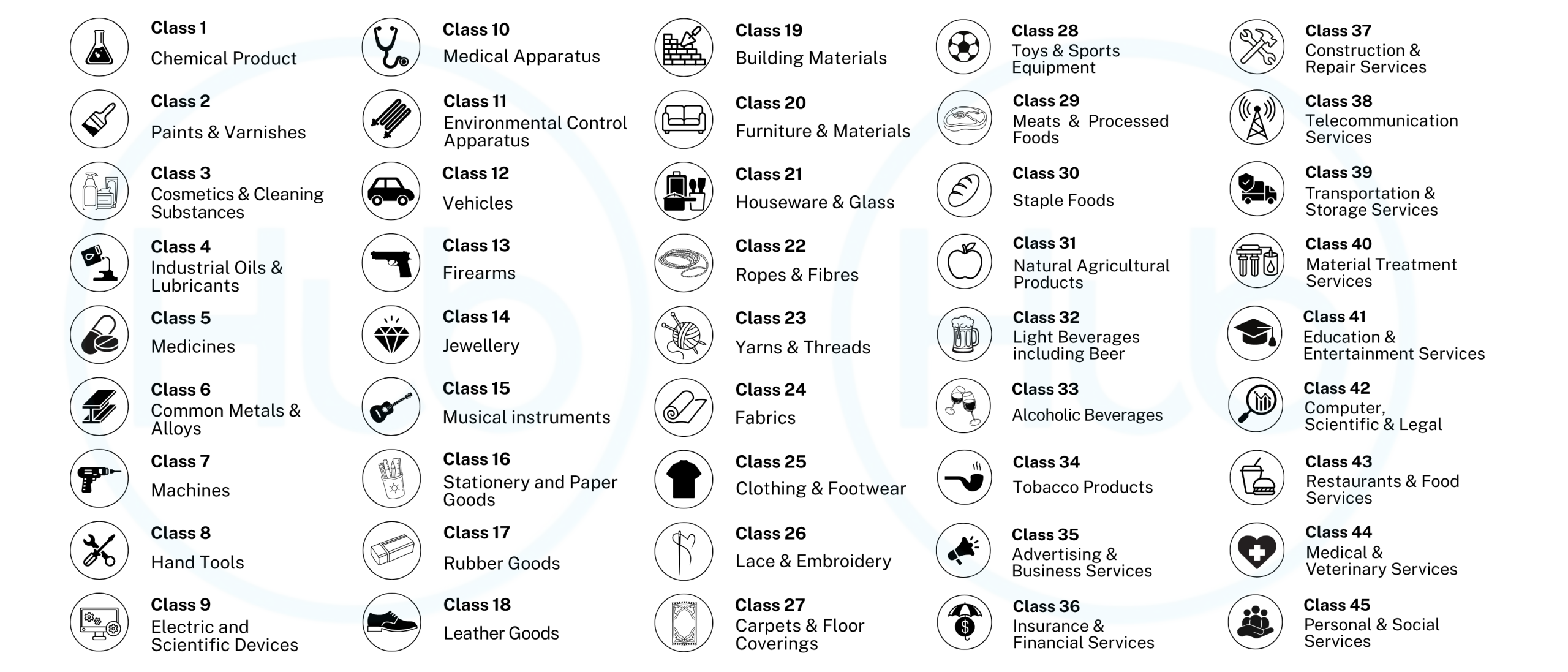
The NICE Classification (NCL) is an international system used to categorize goods and services for the purpose of trademark registration. When applying for a trademark, you are required to identify the correct class number and provide a clear specification that matches the NICE Classification.
It’s important to note that simply selecting a class heading does not automatically cover all goods or services within that class. Each specification must be clearly stated and accurately reflect what your trademark will be used for. Businesses should ensure that their specifications are precise and aligned with their actual commercial use.
FAQ.
The registration of a trademark is valid for 10 years from the date of application. It can be renewed indefinitely for 10 years at a time by paying the applicable renewal fee.
The process from registration leading up to results typically takes between 6 to 12 months.
For trademark registration purposes, all goods and services are categorised into 45 international classes under the NICE Classification system. You should only register your trademark for the specific classes that are relevant to the goods or services your business offers.
To file for an international application under the Madrid Protocol, the trade mark must be registered first in the country of origin.
While registering a business or trade name gives your company a legal identity with local authorities, it does not grant you exclusive rights to that name for branding or commercial use.
A registered trademark, on the other hand, gives you exclusive statutory rights to use your name (or logo, product, or brand) within specific industries or classes. It allows you to:
-
Prevent others from using a similar name in related markets
-
Take legal action against infringement
-
Secure your brand’s identity and commercial value
⚠️ Important Distinction:
-
A business name identifies your company for legal and administrative purposes.
-
A trademark protects the commercial use of your brand in the marketplace.
If your business plans to build brand recognition or revenue around your name, it is strongly recommended to register it as a trademark. This is especially critical for new companies or brands, which may not yet have enough market history to rely on common law protections like passing off.